
How to Wear a Backpack on a Motorcycle (So It Doesn't Slide)
You know the feeling. Two minutes into the ride, one strap has crept off your shoulder, and every time you brake the bag lurches forward like it's trying to overtake you. Knowing how to wear a backpack on a motorcycle properly fixes almost all of that. Wear it high and snug, fasten the sternum and waist straps, keep the load light and centred over your spine, and tuck away anything that dangles. Do that and the bag stays put, your back stays happier, and your handling stays predictable.
Here are the six steps, plus an honest look at when a backpack is the wrong tool for the ride. For the bigger picture on choosing a pack, see our ultimate guide to biker backpacks.
Why how you wear it matters more than what you wear
A great pack worn badly is still a liability. A decent pack worn right is fine for most commutes. That's the whole game. Most of the trouble riders blame on "carrying a backpack" comes down to three things — the bag swaying and upsetting your balance, weight grinding on your shoulders and lower back, and how a bulky pack behaves if you go down. We covered that debate in full in our guide on whether it's safe to ride a motorcycle with a backpack. This article is the how-to. Get the technique right and you neutralise most of the risk before you've left the driveway.
How to wear a backpack on a motorcycle: 6 steps
Run through these in order. The first time takes a minute; after that it's automatic.
1. Pack heavy items closest to your back
Weight distribution decides everything. Put the heaviest things — laptop, tools, a full water bottle — low in the bag and flat against your spine. That keeps your centre of gravity stable instead of top-heavy. If you're using side pockets, balance them: a bottle on the left wants something of similar weight on the right, or the bag pulls to one side in corners.
2. Cinch the shoulder straps high and tight
The pack should sit between your shoulder blades, not sag down onto your lower back. A low, loose bag drags backward when you accelerate and swings when you lean. Snug it up until it feels like part of you.
3. Fasten the sternum (chest) strap — always
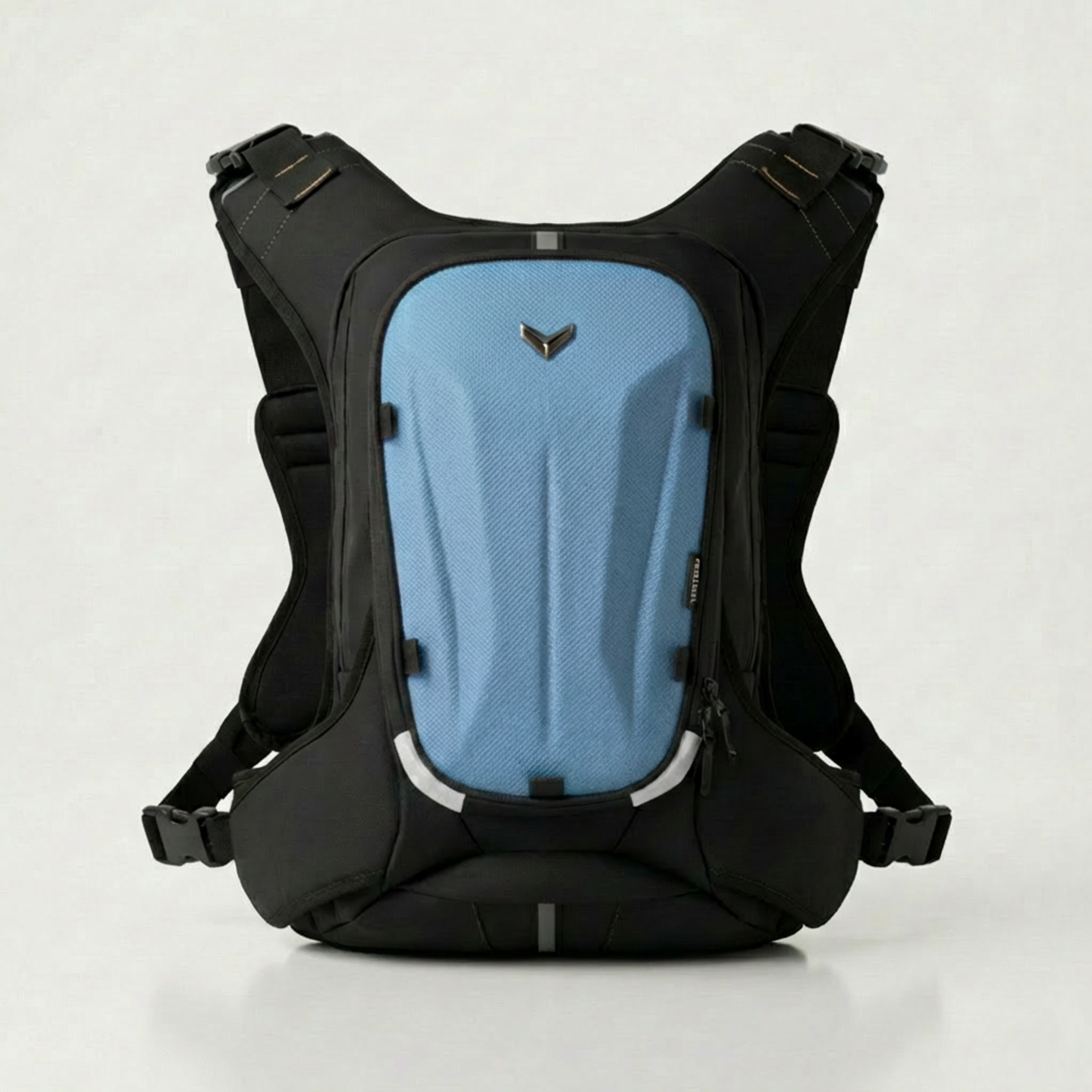
This is the single biggest anti-slide move, and it's the one people skip. The chest strap stops the shoulder straps sliding outward and keeps the whole bag centred. If your current bag doesn't have one, that's a sign it wasn't built for riding. Every pack in the Vantora Life biker backpack collection has one for exactly this reason.
4. Buckle the waist/hip belt for longer rides
The hip belt transfers load off your shoulders and onto your hips, which are far better at carrying it. It also locks out the side-to-side sway that tires you out on longer runs. For a ten-minute hop it's optional. For anything longer, buckle it.
5. Tuck and clip every loose strap
Dangling straps are the quiet hazard. A loose end can flap in the wind, or worse, catch the rear wheel, chain, or footpeg. Roll the excess and clip it or tuck it through a keeper. Ten seconds now, no nasty surprise later.
6. Do a 10-second stability test before you roll
With the bag on and everything fastened, twist your torso side to side and rock the bike gently off its stand. The pack shouldn't shift, sag, or pull you off balance. If it does, tighten a strap and test again. This quick check catches the problem in the driveway instead of at 60 on the highway.
Common mistakes that make a backpack slide or hurt
Most sore-shouldered, sliding-bag complaints trace back to the same handful of errors. Wearing it too low. Leaving the chest strap unclipped. Overpacking past ~10–15% body weight. And using a flat-panel bag that turns your back into a sweat patch on a 40°C commute, with no reflective trim for the ride home after dark.
A purpose-built riding pack designs those mistakes out. A ventilated back panel moves air, a sternum and waist strap hold the load, and reflective detailing keeps you visible. If you're not sure what separates a real riding pack from a repurposed college bag, our breakdown of the best backpack for bikers walks through the features that actually matter.
When to wear it vs strap it to the bike
Wearing a backpack isn't always the answer. The heavier and longer the ride, the more sense it makes to move the weight onto the bike instead of your body. Match the carry to the trip:
| Ride type | Load | Best carry method |
|---|---|---|
| City commute | Light (under 20–25L) | Wear a snug biker backpack |
| Office run with laptop | Medium | Backpack with a padded laptop sleeve |
| Weekend touring | Heavy | Small pack for essentials + saddlebags or tail bag |
| Long highway trip | Heavy / bulky | Strap it to the bike; keep only quick-access items on you |
Plenty of tourers do both — a small pack for phone, wallet, and a hydration bladder, with the bulk lashed to the pillion seat or a rack. For rugged, weather-ready carry on those longer runs, our outdoor & bike bags are built for it.
What to look for in a riding-ready backpack
If the takeaway is "technique plus the right pack," here's the shortlist for the pack. A sternum and waist strap to lock it down. A ventilated back panel for Indian heat. Water-resistant fabric for the monsoon. A padded, raised laptop sleeve for potholed roads. Reflective detailing for low light. And a tapered shape that doesn't act like a sail.
That's the checklist the Vantora Life biker backpack collection is built to. If your commute runs long or hot, the Prime hydration backpack adds a water bladder so you're not stopping every half hour in the sun, and before the wet season hits, learn the difference between waterproof vs water-resistant backpacks. Not sure what size fits your daily load? Our backpack size guide sorts that out.
Frequently asked questions
How do I stop my backpack from sliding while riding?
Fasten the sternum (chest) strap and, on longer rides, the waist belt. Wear the bag high and snug between your shoulder blades, and keep it lightly and evenly packed. The chest strap alone eliminates most sliding, which is why every proper biker backpack includes one.
Should I wear a backpack or strap it to the motorcycle?
Wear it for short, light city rides. For heavy loads or long-distance touring, strap it to the bike using saddlebags, a tail bag, or a luggage rack so the weight sits on the motorcycle instead of your shoulders.
How tight should a motorcycle backpack be?
Tight enough that it doesn't shift when you twist your torso or lean into a corner, but not so tight it restricts breathing or arm movement. It should feel like part of your back, sitting high rather than sagging onto your waist.
Is it OK to wear a normal backpack on a bike?
For a short, slow ride with a light load, yes — if it's small and worn snug. But a regular backpack lacks the chest strap, aerodynamic shape, and load stability of a biker backpack, so it slides and tires you faster at speed.
How heavy can my backpack be for riding?
Keep the loaded weight under roughly 10–15% of your body weight. Beyond that, strap pressure and fatigue climb quickly, and the extra weight starts affecting your balance and handling.
The takeaway
Learning how to wear a backpack on a motorcycle comes down to six habits: heavy items to your back, straps cinched high, chest strap fastened, waist belt on for the long ones, loose ends tucked, and a quick stability test before you go. Get those right and pair them with a pack actually designed for riding, and a bouncing, shoulder-digging backpack becomes a non-issue. Ready to ride with one that stays put? Browse the Vantora Life biker backpack collection.
Read more
A backpack that works fine on a bus becomes a liability on a motorcycle. It slides off your shoulder in traffic, soaks through in the first monsoon shower, turns your back into a sweat patch by the...
Every backpack listing seems to promise your gear will stay dry, right up until the first real downpour proves otherwise. The confusion is the word itself. Water-resistant means the bag shrugs off ...