
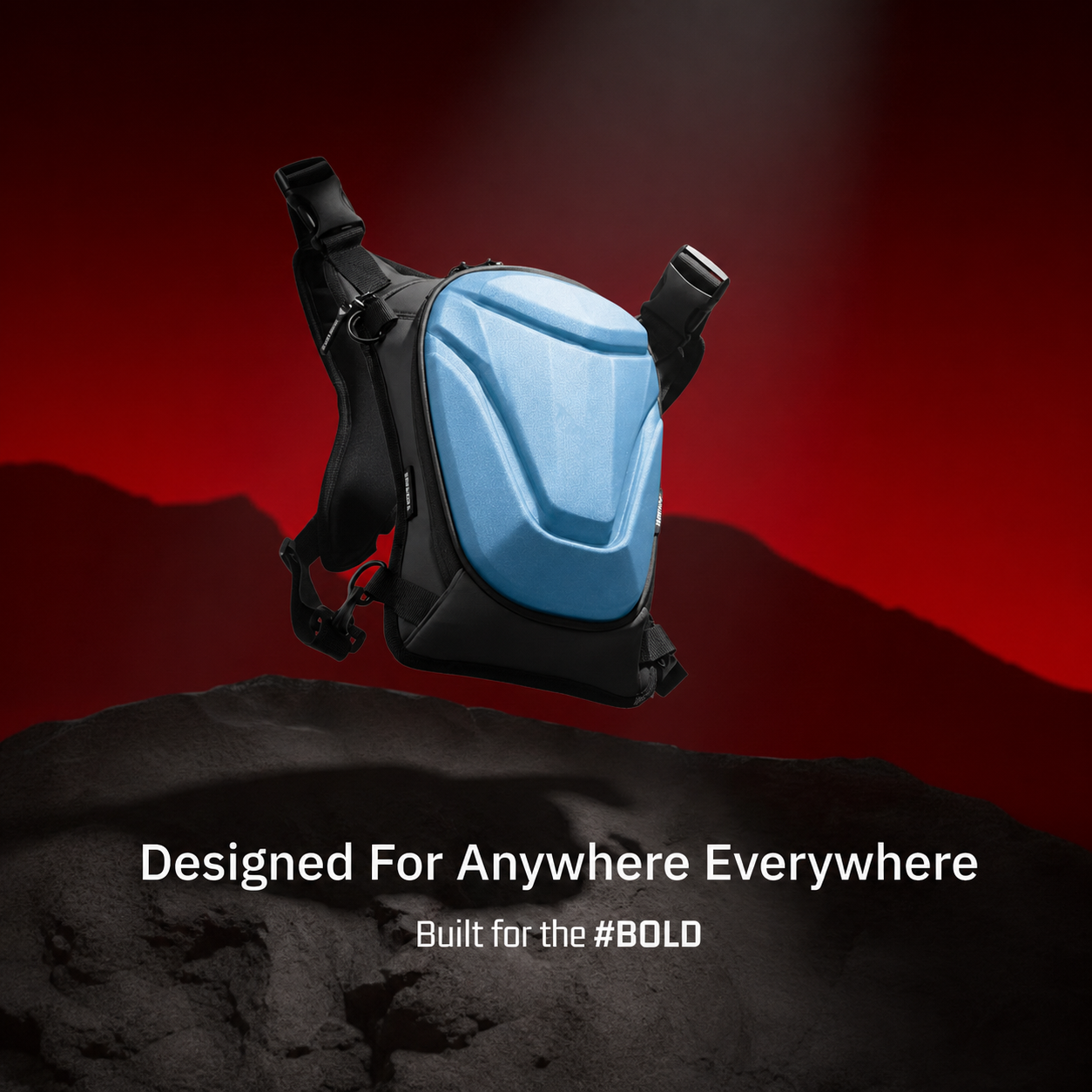
Waterproof vs Water-Resistant Backpacks: What Bikers Actually Need
Every backpack listing seems to promise your gear will stay dry, right up until the first real downpour proves otherwise. The confusion is the word itself. Water-resistant means the bag shrugs off light rain and splashes for a while before it gives up. Waterproof means water genuinely can't get in, even under sustained rain. For a biker in the Indian monsoon, that gap is the difference between a dry laptop and a dead one. Here's exactly what separates the two, what the ratings mean, and which you actually need on the bike.
The core difference, in plain terms
Both terms describe how a bag handles water, but they sit at very different points on the scale.
| Property | Water-resistant | Waterproof |
|---|---|---|
| Handles light rain / splashes | Yes, for a while | Yes |
| Handles a heavy downpour | No — soaks through | Yes |
| Zips | Standard, water gets in | Sealed or storm-flap protected |
| Seams | Stitched, can wick water | Taped or welded |
| Fabric | Tight weave or light coating | Coated / laminated, higher rating |
| Best for | Drizzle, city hops, dry months | Monsoon riding, long wet rides |
Most backpacks sold as "weatherproof" are water-resistant. That's fine for a light shower. It's not fine for twenty minutes in a Mumbai or Bengaluru monsoon burst.
What the ratings and materials actually mean
Marketing loves vague claims, so learn to read the real signals instead.
Fabric and coatings
A higher denier count (say 600D and up) means a tougher, tighter weave. But weave alone doesn't stop water — the fabric needs a coating (like PU or a DWR finish) or a laminate. Ask what the fabric is treated with, not just what it's made of.
Zips and flaps
This is where most bags leak. Standard coil zips let water straight in. Look for sealed zips, or a storm flap that covers the zip line, on any compartment holding electronics.
Seams
Every stitch is a needle hole. Truly waterproof bags tape or weld their seams. Water-resistant bags usually don't, which is why they wet out from the seams first.
Rain covers
Plenty of riding packs are water-resistant on their own but ship with a separate waterproof rain cover for downpours. That's a practical, affordable middle path — resistant for daily use, cover-on for the monsoon.
Which do you actually need for the Indian monsoon?
It depends on your ride, not on the marketing.
- Dry-season city commuter: water-resistant is genuinely enough. You'll rarely test its limits.
- Year-round rider with a laptop: you want waterproof-grade protection — or a resistant pack plus a rain cover — for the electronics compartment specifically.
- Monsoon touring / long wet rides: go fully waterproof. Sustained rain finds every weakness a resistant bag has.
A smart compromise most riders land on: a water-resistant everyday pack that carries a rain cover for the days the sky opens. Our shortlist of waterproof backpacks for bikers covers models built for exactly this.
How to keep your gear dry, whatever bag you own
Even a great bag benefits from good habits:
- Line the main compartment with a dry bag or a sturdy pouch for anything that must stay dry.
- Keep your laptop and documents in a sealed inner sleeve, not loose in the main space.
- Deploy the rain cover before it pours, not after you're already wet.
- Re-apply a DWR spray once or twice a season — coatings wear off with use.
- Dry the bag fully after a soaking so the lining doesn't smell or mildew.
What to look for in a monsoon-ready biker backpack
Bringing it together: for wet-weather riding you want a coated or laminated fabric, sealed or storm-flap zips over the electronics, taped seams (or a reliable rain cover), and a padded, water-resistant laptop sleeve. That combination is what the Vantora Life biker backpack collection is built around for Indian conditions. If you also ride off the tarmac, the outdoor & bike bags range adds rugged, weather-ready options. And if you're still deciding on the pack overall, start with our ultimate guide to biker backpacks.
Frequently asked questions
What's the difference between waterproof and water-resistant?
Water-resistant means a bag repels light rain and splashes for a while before water gets through. Waterproof means water can't get in even under sustained heavy rain, thanks to sealed zips, taped seams, and coated fabric.
Are water-resistant backpacks OK for the monsoon?
Only for short exposure. In a heavy monsoon downpour a water-resistant bag will eventually soak through, especially at the zips and seams. For monsoon riding, use a waterproof bag or add a rain cover.
Will a water-resistant backpack protect my laptop in the rain?
For a light shower, usually. For a real downpour, not reliably. Keep the laptop in a sealed inner sleeve and use a rain cover, or choose a bag with a waterproof-grade electronics compartment.
How can I make my backpack more waterproof?
Add a rain cover, line the interior with a dry bag, keep electronics in a sealed pouch, and re-apply a DWR spray each season. These steps close most of the gap on a water-resistant bag.
The takeaway
Waterproof vs water-resistant isn't marketing hair-splitting — for a biker, it decides whether your gear survives the ride home. Water-resistant covers the dry months and light rain; waterproof (or resistant-plus-rain-cover) is what the monsoon demands. Match the protection to your rides and your laptop will thank you. Ready to gear up? Browse the Vantora Life biker backpack collection.
Read more
You know the feeling. Two minutes into the ride, one strap has crept off your shoulder, and every time you brake the bag lurches forward like it's trying to overtake you. Knowing how to wear a back...
The "best" biker backpack isn't a single bag — it's the one that matches how you ride. A daily commuter carrying a laptop needs something very different from a tourer chasing highways all weekend. ...