
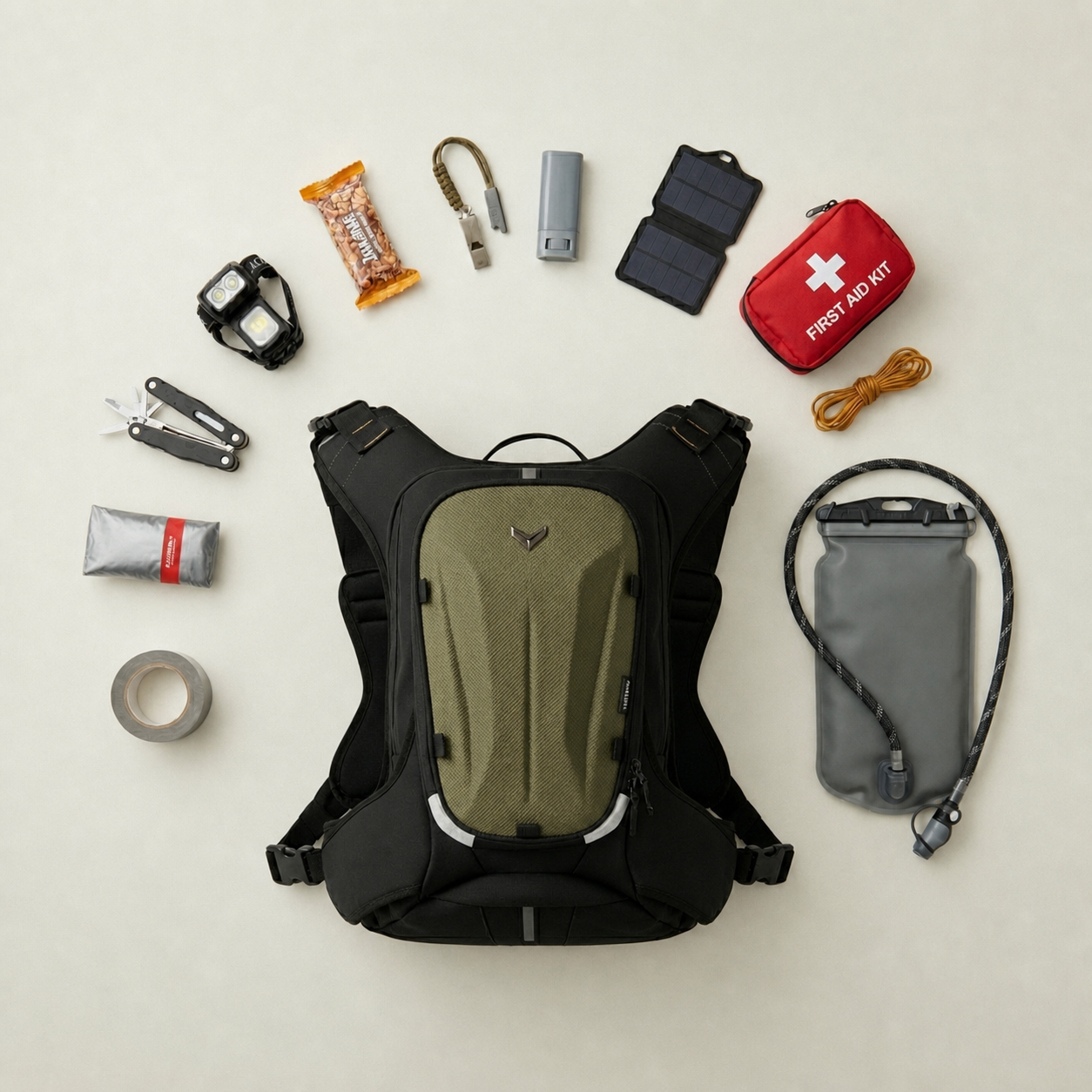
What Size Backpack Do You Need for Riding? 20L vs 30L vs 40L
Buy a backpack too big and it flaps in the wind, half-empty and unstable. Too small and you're strapping a helmet to the outside because nothing fits. Getting the size right is one of the most underrated decisions a rider makes. As a quick rule: 15–20L suits short city rides, 20–25L is the daily-commute sweet spot, and 30–40L is touring territory — usually paired with bike luggage rather than worn full. This guide breaks down each size by real riding use so you buy once and buy right.
For the wider buying picture, our ultimate guide to biker backpacks covers features alongside size.

Why size matters more on a bike
On foot, an oversized backpack is just a bit heavy. On a motorcycle, it's a handling issue. A large pack that isn't full lets the load shift around, which throws off your balance in corners, and its bulk catches wind like a sail at highway speed — tiring you out and adding drag. The goal isn't maximum capacity. It's the smallest bag that comfortably holds your real, everyday load. Size for your routine, not for your once-a-year longest trip.
Backpack size by riding use
| Capacity | Best for | Typically fits |
|---|---|---|
| 15–20L | Short city rides, errands | Phone, wallet, slim laptop, light jacket |
| 20–25L | Daily commuting | 15–16″ laptop, charger, lunch, a layer |
| 25–30L | Weekend rides, gym-and-go | Change of clothes, shoes, helmet-friendly |
| 30–40L | Touring, multi-day trips | Clothes, rain gear, tools — often bike-mounted |
15–20L: the short-ride minimalist
If your riding is mostly short hops around the city — a quick commute, running errands, meeting friends — a compact 15–20L pack is all you need. It sits close to your back, clears traffic without snagging, and stays stable because it's rarely underfilled. For loads this light, a sling like the NEXUS Slingpack or the budget Switch Sling Backpack often does the job better than a full backpack.
20–25L: the daily-commute sweet spot
This is the size most riders should buy. A 20–25L pack swallows a 15–16″ laptop, a charger, lunch, and a folded layer without becoming a hump on your back. It's big enough to be genuinely useful and small enough to stay aerodynamic and stable at speed. Most of the packs in the Vantora Life biker backpack collection sit right in this range for exactly that reason. If you carry a laptop daily, prioritise a padded sleeve — the ACE Backpack is built for it.
25–30L: weekend rides and gym-and-go
Step up to 25–30L when you occasionally need to carry more — a change of clothes, shoes, or a helmet you want to bring inside. The Prime Hydration Backpack 25L sits at the top of the practical "worn" range: large enough for a weekend's essentials and hydration, small enough to still ride comfortably on your back.
30–40L: touring, but think twice about wearing it
Here's the honest part. A 30–40L pack holds a lot — clothes, rain gear, tools for a multi-day trip — but carrying that weight on your shoulders for hundreds of kilometres is punishing, and a bag that big turns into a genuine wind problem at speed. For loads this size, most experienced tourers move the weight onto the bike using saddlebags, a tail bag, or a rack, and keep only quick-access items in a small pack on their back. Our outdoor & bike bags range covers rugged options for exactly this. When in doubt, split the load rather than shouldering all of it.
How to measure your real load

Not sure which number is yours? Do this: pack everything you carry on a typical ride into whatever bag you own now, and note how full it is. If it's stuffed, size up one bracket. If there's room to spare, you can size down and gain stability. For a fuller walkthrough, our backpack size guide covers measuring by litres and by what you actually carry.
Whatever size you land on, keep it under roughly 10–15% of your body weight loaded, and wear it right — see how to wear a backpack on a motorcycle.
Frequently asked questions
What size backpack is best for motorcycle commuting?
For daily commuting, 20–25 litres is ideal. It fits a 15–16″ laptop plus a day's essentials while staying stable and aerodynamic. Larger sizes add wind drag and let the load shift.
Is a 40L backpack too big for a motorcycle?
Worn on your back, usually yes — a full 40L pack strains your shoulders over distance and catches significant wind at speed. For 30–40L loads, mount the bag on the bike with saddlebags or a rack and wear only a small pack for essentials.
What size backpack fits a full-face helmet?
Most packs of 25 litres and above can fit or carry a standard full-face helmet, often via an external helmet net. Measure your specific helmet against the pack's capacity before buying.
How heavy should a loaded riding backpack be?
Keep it under roughly 10–15% of your body weight. Beyond that, strap pressure and fatigue climb quickly and the extra weight affects your balance.
The takeaway
The right size backpack for riding is the smallest one that holds your real load: 15–20L for short rides, 20–25L for daily commuting, and 30–40L for touring — the last usually strapped to the bike rather than worn. Size for your everyday routine and you'll ride more comfortably and handle better. Find your fit in the Vantora Life biker backpack collection.
Read more
The "best" biker backpack isn't a single bag — it's the one that matches how you ride. A daily commuter carrying a laptop needs something very different from a tourer chasing highways all weekend. ...
Riding in Indian heat quietly dehydrates you faster than you'd think — wind and concentration mask the thirst until you're already low. Stopping every half hour to dig out a bottle is annoying, so ...